Dana Ludwig · 23 September 2026
Tracing Audience Interaction Patterns Following Major Platform Infrastructure Adjustments in Niche Online Networks
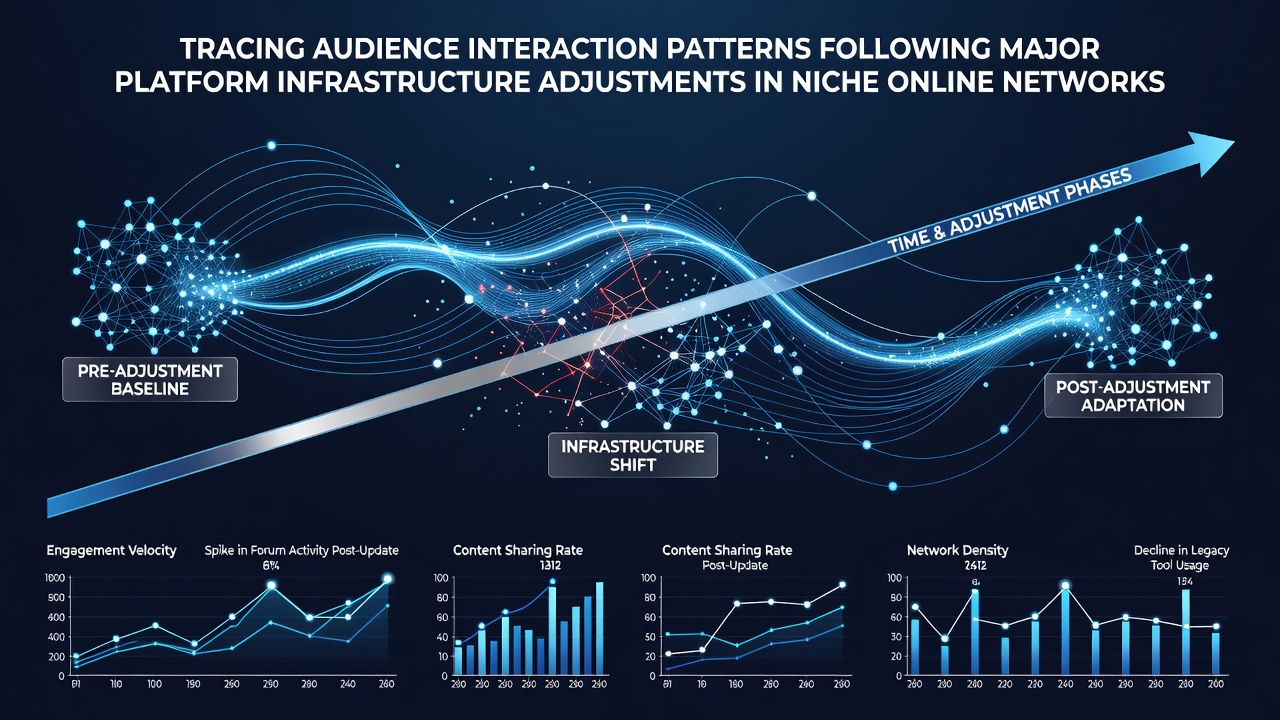
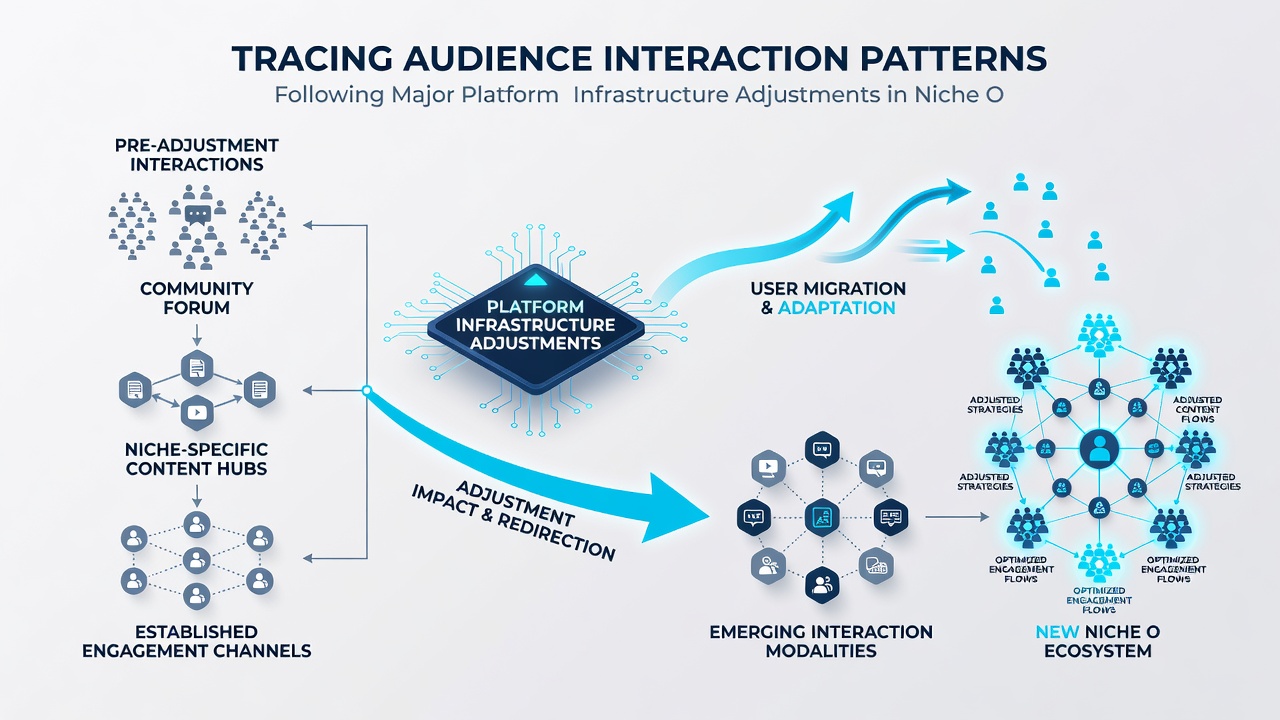
Platform operators in niche online networks routinely implement infrastructure adjustments that range from server migrations and API overhauls to content delivery network upgrades, and these modifications often produce measurable shifts in how audiences interact with content and each other. Researchers track these shifts through quantitative metrics such as session duration, comment frequency, and cross-post sharing rates while qualitative observations capture changes in conversation depth and community cohesion. Data from multiple networks shows that even brief periods of downtime or latency spikes can redirect traffic toward alternative discussion threads or external sites, creating new patterns that persist long after the technical issues resolve.
Common Types of Infrastructure Adjustments
Network administrators typically address scalability concerns by upgrading database architectures or redistributing load across regional servers, and these changes directly influence response times for users in different geographic zones. Content moderation systems also receive backend enhancements that alter how posts surface in feeds, which in turn affects visibility for smaller creator accounts. Observers note that API rate-limit adjustments frequently coincide with spikes in automated bot activity, prompting further refinements to authentication protocols. Studies conducted across decentralized forums reveal that such layered updates rarely occur in isolation, instead forming sequences where one modification triggers compensatory changes elsewhere in the stack.
Methods Used to Trace Interaction Shifts
Analysts combine server log examination with frontend event tracking to reconstruct user journeys before and after each adjustment, allowing precise identification of drop-off points. Heatmap tools capture click distributions on discussion pages while timestamped API calls reveal which endpoints experience increased or decreased load. Researchers cross-reference these technical signals with public activity data to distinguish between genuine user behavior changes and artifacts introduced by measurement tools themselves. Several academic projects have published frameworks that standardize this multi-source correlation process, enabling comparisons across networks of varying sizes and topical focuses.
One research initiative at a North American university examined a specialized hobbyist platform after its transition to a new cloud provider, documenting a 17 percent rise in thread views alongside a corresponding decline in average reply length. The team attributed the pattern to faster page loads that encouraged browsing but reduced the incentive for sustained discussion. Similar findings emerged from monitoring efforts in European gaming communities where infrastructure scaling coincided with increased mobile participation yet lower desktop session times.
Observed Patterns Across Different Network Types
Specialized interest forums often experience an initial surge in new registrations following infrastructure improvements that enhance search functionality, yet retention rates depend on whether existing community norms adapt to the increased volume. In contrast, smaller Discord-based groups show pronounced sensitivity to voice server latency reductions, with voice channel occupancy rising sharply while text chat volume remains stable. Data collected through 2025 indicates that networks serving creative professionals tend to see more even distribution of engagement across time zones once global CDN nodes improve, reducing the previous dominance of peak hours in specific regions.
By September 2026 analysts expect further refinement of these tracing techniques through integration of privacy-preserving aggregation methods that comply with evolving data protection standards from agencies such as Innovation, Science and Economic Development Canada. Early pilots already demonstrate that aggregated session graphs can highlight migration paths users take when core features temporarily degrade, providing operators with actionable signals without exposing individual identities.
Tools and Data Sources Supporting the Analysis
Commercial analytics suites now incorporate modules specifically designed for post-adjustment comparison, pulling together metrics from application performance monitoring platforms and community management dashboards. Independent researchers supplement these with custom scripts that parse public activity archives, creating longitudinal datasets spanning multiple infrastructure events. Reports from organizations focused on digital infrastructure, including those published by the Office of the Australian Information Commissioner, emphasize the importance of transparent logging practices that allow external verification of observed patterns. These combined resources enable systematic mapping of how technical changes propagate through social layers of niche networks.
Conclusion
Tracing audience interaction patterns after infrastructure adjustments requires coordinated use of technical logs, behavioral metrics, and contextual community knowledge, and the resulting insights help operators anticipate downstream effects on engagement. Continued development of standardized methodologies will support more precise comparisons across diverse network environments while respecting applicable privacy frameworks. The evidence accumulated to date demonstrates consistent, quantifiable responses to backend modifications, underscoring the value of ongoing monitoring as platforms evolve.