
Leon Reed · 7 October 2026
Decoding Metadata Patterns That Shape Content Discovery in Specialized Web Collectives
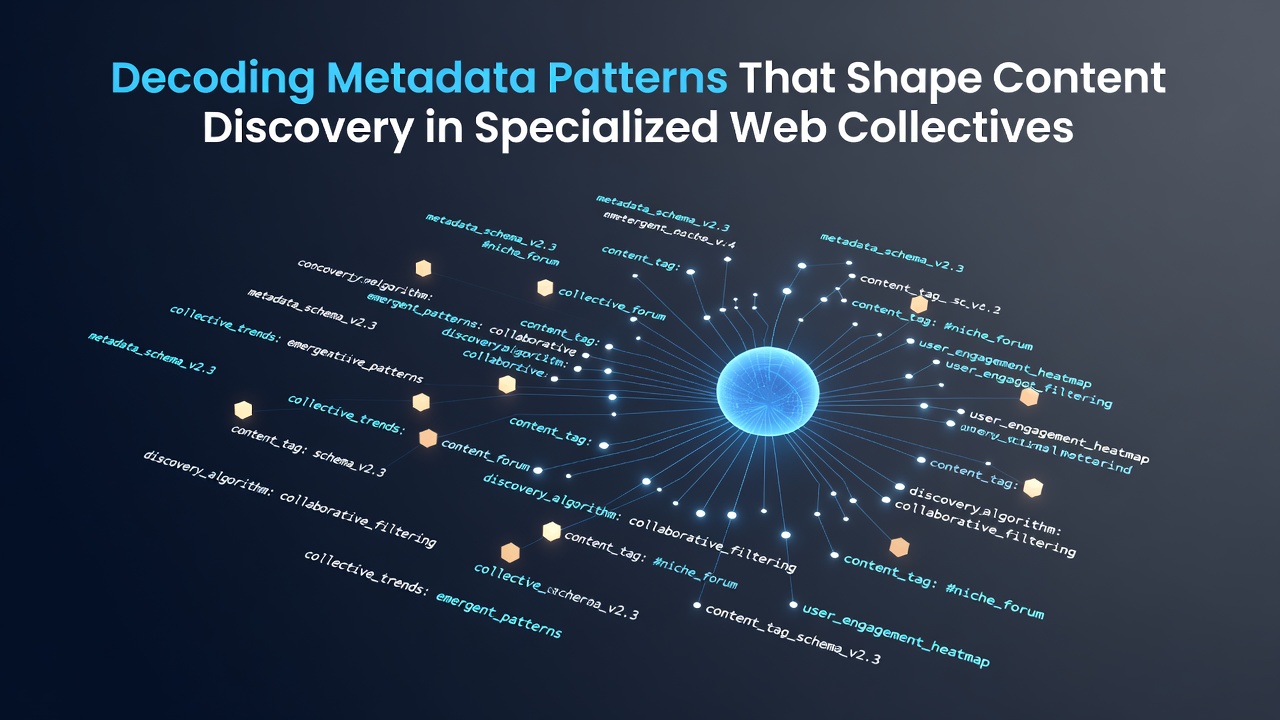
Specialized web collectives operate as focused digital spaces where users gather around shared interests, from technical forums to hobbyist archives, and metadata patterns drive how content surfaces within these environments. Observers note that tags, timestamps, user engagement signals, and structural descriptors form the backbone of discovery systems, allowing algorithms to match material with audience interests across platforms that range from private servers to open discussion boards.
Core Components of Metadata in Niche Networks
Metadata in these collectives includes descriptive elements such as keywords attached to posts, creation dates, interaction counts, and relational links between entries. Researchers have documented how these elements combine to create visibility hierarchies; for instance, a post with dense keyword clusters and recent timestamps tends to appear higher in internal search results while older entries rely on archived categorization for retrieval. Data from platform analyses shows that collectives using standardized schemas experience faster indexing cycles, which in turn affects how quickly new contributions reach active members.
Structural metadata, including thread hierarchies and cross-post references, adds another layer. Those who have examined forum architectures find that nested comment trees generate secondary signals that influence recommendation engines, since replies often carry inherited tags from parent topics. This creates feedback loops where popular threads accumulate additional descriptors over time.
Pattern Recognition and Algorithmic Matching
Algorithms within specialized collectives scan for recurring metadata combinations to predict relevance. Studies indicate that frequency of specific tag pairings, such as pairing technical terms with user location data, correlates with higher click-through rates inside targeted groups. In October 2026, reports from academic teams at multiple institutions highlighted how temporal metadata shifts, including spikes in edit activity, serve as early indicators of emerging subtopics that later gain traction.
Content discovery improves when systems account for both explicit and implicit metadata. Explicit fields like categories allow direct filtering, whereas implicit signals derived from reading duration or share patterns refine personalization. Observers tracking these dynamics report that collectives incorporating both types achieve broader content circulation without relying solely on user-initiated searches.
Regional Variations in Metadata Practices
Practices differ across geographic regions due to regulatory frameworks and platform origins. Analyses of North American collectives reveal heavier emphasis on engagement-derived metadata, while European counterparts often prioritize compliance-related descriptors tied to data retention rules. A Pew Research Center examination of community interactions provided baseline figures on tag usage that researchers later extended to niche platforms. Australian academic groups have contributed comparative datasets showing how time-zone metadata affects content freshness scoring in distributed collectives.
Cross-border collectives face additional complexity when harmonizing metadata standards. Teams coordinating between jurisdictions track how conflicting tag requirements alter discovery outcomes, with some platforms adopting hybrid schemas to maintain accessibility across regions.
Case Examples from Established Collectives
One technical archive maintained by hobbyist engineers demonstrated measurable shifts after updating its metadata protocol to include version-specific descriptors. Usage logs revealed that previously buried documentation rose in internal rankings once timestamps aligned with software release cycles. Another example comes from a creative writing collective where relational metadata linking author profiles to thematic tags produced sustained increases in cross-recommendations between members.
These instances illustrate how targeted metadata adjustments reshape content pathways without altering core platform code. Researchers compiling longitudinal data note that such changes propagate through recommendation layers over weeks rather than days, allowing collectives to observe gradual adjustments in participation patterns.
Technical Implementation Considerations
Implementation relies on consistent schema adoption across user-generated content. Platforms that enforce validation at upload time reduce noise in metadata fields, which improves matching accuracy downstream. Database queries optimized for multi-field searches handle the combined weight of tags, timestamps, and engagement metrics more efficiently than single-index approaches.
Security layers around metadata also matter. Encryption of sensitive descriptors prevents unintended leakage while still permitting pattern analysis for discovery purposes. Technical documentation from standards bodies emphasizes modular approaches that let collectives toggle specific metadata types based on community preferences.
Conclusion
Metadata patterns continue to define discovery mechanics inside specialized web collectives through layered interactions between tags, temporal data, and relational signals. Ongoing refinements in schema design and algorithmic weighting shape how content moves through these networks, with regional regulatory contexts adding further variables. Continued examination of these systems provides clearer insight into the mechanisms that connect contributors with audiences across focused digital spaces.